

I’m never asked about ‘writers’ block’ because my friends assume it never happens. They’re holding a copy of MUTINY and are surprised by the weight. I guess it’s the 388pp of text that gives it some bulk and I’m waiting for a comment, such as “How long did it take to write this?” But, nobody ever asks, so I have to tell them. “Oh, it took me six years to write.” There’s hardly a reaction, though a short pause and raising of eyebrows. I add, “There were moments when I couldn’t write,” and mention COVID and times when I wanted to throw the manuscript against a wall (difficult to do with my laptop). The question remains – did I ever get writers’ block and, if so, how did I cope with it?
Step 1: give the manuscript a break. Take a long walk, get refreshed, focus on something else, grab a coffee, exercise and meet people. You never know, but you might see something or hear a conversation that inspires your next words.
Step 2: when I’m ready and can face it, I pick up and read over the last chapter and wait and pray for the inspiration to continue.
Step 3: write the next paragraph or two, or three, or the full chapter 🙂
I find it can take days to unblock a writers’ block. Others can force themselves through the stalemate and type away happily. Stephen King always says – when faced with writers’ block – “that’s when you introduce the man with the gun.” I need time to work out where the plot is going. In writing 3 WISE MEN I was doing some high school teaching and had a spare hour between classes. During this time I typed up the next chapter following a long difficult block in my thoughts. And the words just flowed, with a surprising plot outcome that readers still mention to me years later. And, it was a Stephen King moment of much action; a radical event in the plot that transformed the ending.
I have learned the value in resting and waiting for the next steps to unravel during my personal writer’s blocks. Now I don’t get frustrated by these moments, but somewhat excited to see what will follow. After all, a writers’ block is an opportunity to change direction, escape the norm and reorganise thoughts, characters and outcomes. That’s the excitement of writing novels!

 Well, dear bloggers, this may shock you—I am on a long vacation but have no intention to write another book. That’s right, it’s about celebration—celebrating my wife’s very special birthday in Paris. So, writing will take a back seat, though that’s not to say that I won’t find inspiration in being in different places and watching out for interesting characters or settings for my next novel. Will it be a thriller set in Vienna, or a romantic novel based in France? Who knows? The most wonderful thing about writing is that it has few bounds, and the richer the experience (either good or bad) can result in a more satisfying read. Well, that’s the intention.
 Waiting is a difficult game and not many of us are built to handle it well. “Waiting for what?” you might ask. It could be waiting for your next plot idea, next book concept, or waiting for a literary agent to get back to you after a full manuscript request. So, to ease the pain, here are a few suggestions:
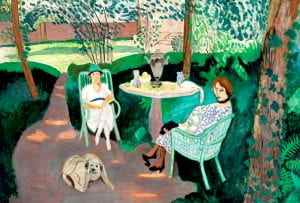 Henri Matisse, one of the giants of 20th-Century art, found himself in a discouraging creative slump in 1930. At the age of 60, the painter had been living in Nice, France, for 13 years, after spending years in Paris as an enfant terrible of the city’s avant garde art world. Isolated from the buzz of the Paris painting scene, Matisse focused on depicting alluring female models in interior studio setups, using vivid patterns and sparkling colours lit by the Mediterranean light. As he fell into a stylistic repetition, some critics, along with Matisse himself, wondered if the once-radical artist had lost his edge. “I have sat down several times to do some [painting],” he wrote to his daughter, Marguerite, in 1929. “But in front of the canvas, I am at a loss for ideas.”
 Travel helps too.